Get Consultation

+91 98182 71232

Think Blue · Automation & Material Handling

Automatic Truck Loading System – Think Blue

Modern logistics and industrial operations require speed, accuracy, safety, and efficient material movement. As businesses handle larger product volumes and face increasing pressure to reduce loading time, traditional truck loading methods can become difficult to manage. Manual handling, forklifts, repeated product movement, and dependence on labour can affect productivity and increase operational challenges.
Smarter Loading

Automation That Connects Your Warehouse to the Truck

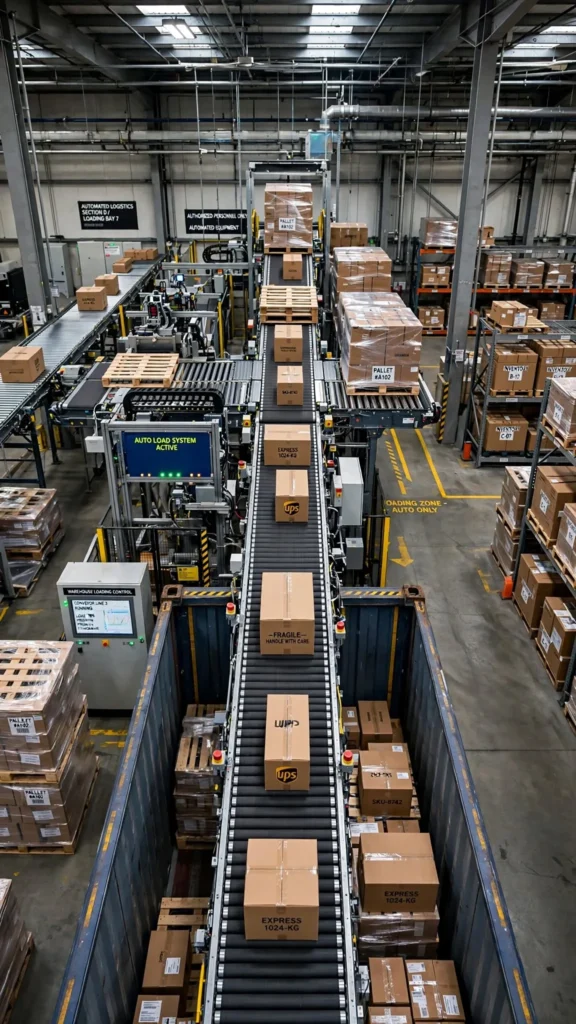
An Automatic Truck Loading System offers a smarter approach by automating the process of transferring products from a warehouse, production line, or storage facility into trucks. By combining conveyors, sensors, control systems, and automated material handling equipment, businesses can create a faster and more organised loading process.

Think Blue provides automation and material handling solutions designed to support modern industrial requirements. With the right automated truck loading setup, businesses can improve material flow, reduce repetitive handling, optimise loading operations, and create a more efficient connection between warehouse and transportation activities.
automated truck loading system
Overview

What Is an Automatic Truck Loading System?

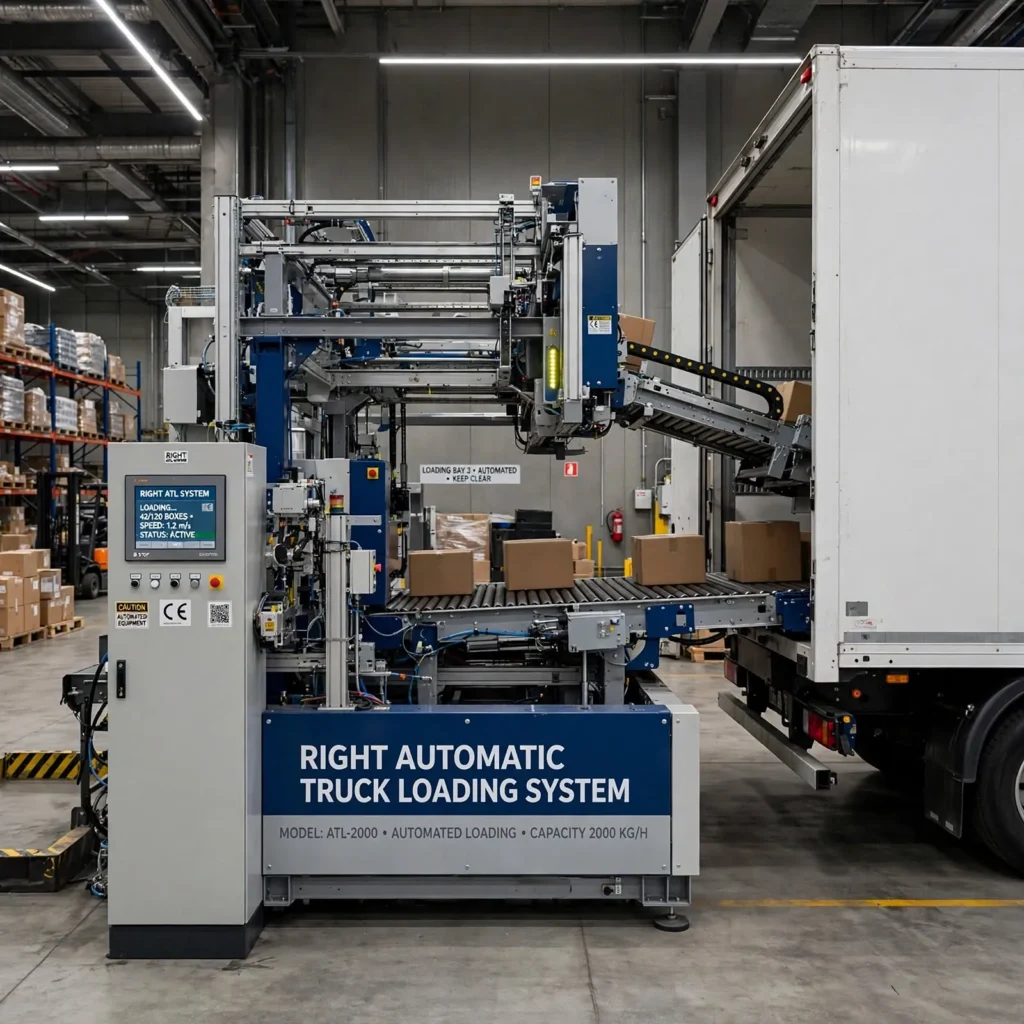
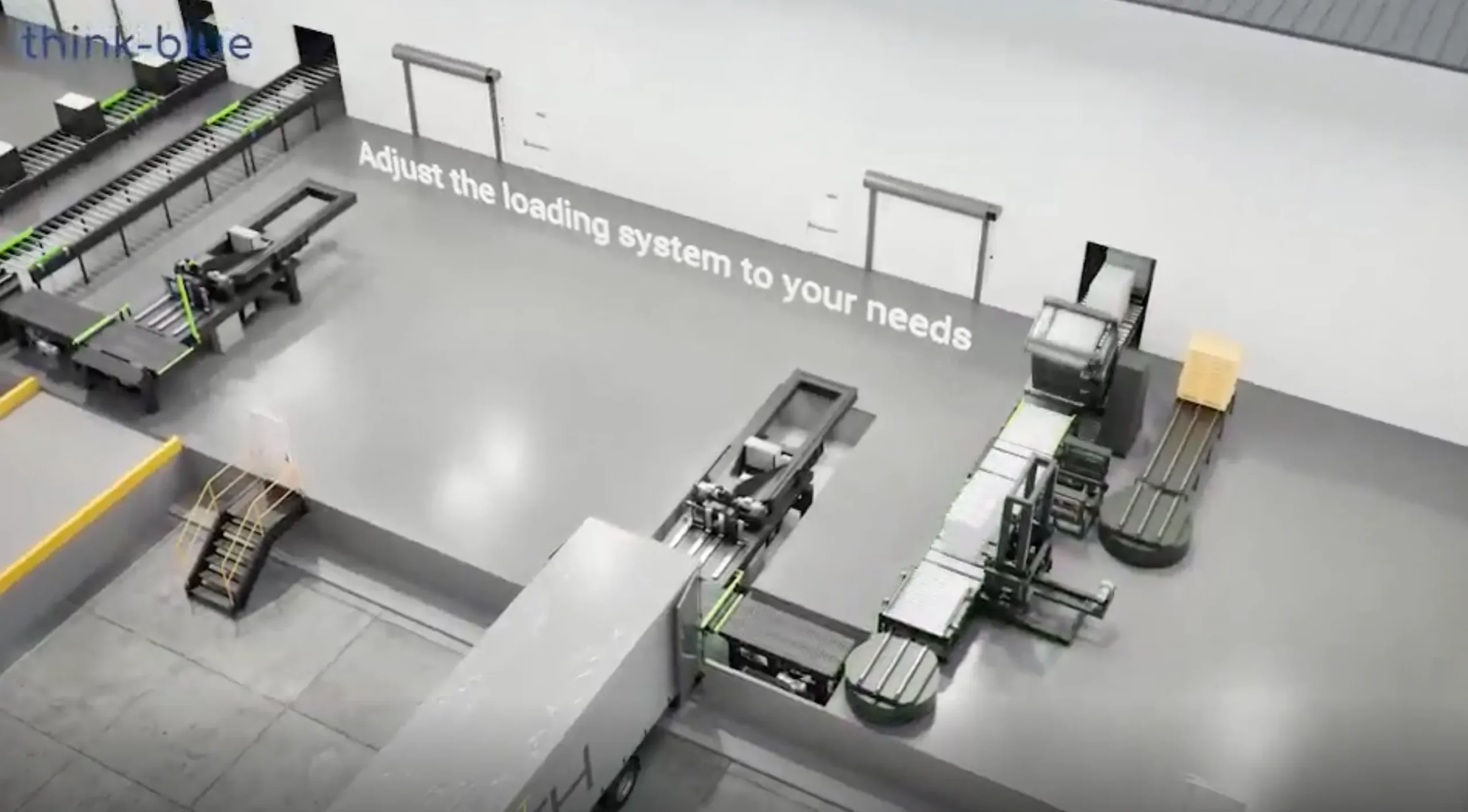
An Automatic Truck Loading System (ATLS) is an automated solution used to load products or materials into trucks with limited manual intervention. The system is designed to move goods from a predefined starting point, such as a production line, warehouse conveyor, or storage area, towards and into the vehicle.
Depending on the application, an automatic truck loading system may use conveyors, telescopic conveyors, rollers, sensors, pallet handling equipment, lifting mechanisms, and automated control systems.
The objective is to make truck loading more organised and efficient while reducing unnecessary manual movement.

Designed for different products

  • Cartons and boxes
  • Bags and packaged products
  • Pallets
  • Industrial components
  • FMCG products
  • Finished manufactured goods
  • Containers
  • Unit loads
  • Other packaged materials
The final system configuration depends on the type of product, truck dimensions, required loading capacity, loading pattern, available floor space, and operational requirements.
The Challenge

Why Do Businesses Need Automated Truck Loading?

Truck loading is a critical part of the supply chain because delays at the loading dock can affect the entire distribution process. When products are moved manually, businesses may require multiple workers and material handling equipment to complete each loading cycle. This can result in:

Longer loading times

Higher labour requirements

Repetitive manual handling

Increased product movement

Forklift dependency

Truck waiting time

Inconsistent loading performance

Difficulty handling high dispatch volumes

An Automatic Truck Loading System can help businesses streamline this process by creating a controlled flow of products from the warehouse or production area to the vehicle.
For high-volume operations, improving every loading cycle can contribute to better overall productivity.
The Process

How Does an Automatic Truck Loading System Work?

The exact operation of an automated truck loading system depends on its design and application. However, the basic process generally involves several coordinated stages.
01

Product Feeding

Products are first supplied to the loading system from a production line, warehouse conveyor, pallet handling area, or other material handling equipment.
02

Product Movement

Conveyors or other automated equipment transport the products towards the truck loading zone.
03

Product Detection

Sensors can detect the presence, position, and movement of products. These signals help the control system coordinate the loading process.
04

Vehicle Positioning

The truck is positioned at the designated loading area. Depending on the system, positioning and safety sensors can assist in ensuring that the vehicle is correctly placed before loading begins.
05

Automated Loading

The system then moves products into the truck according to the required loading sequence or configuration. Different applications may use telescopic, roller, belt, chain, or pallet conveyors, or other equipment.
06

Load Completion

Once the required products have been loaded, the system completes the cycle and moves back into its designated position.
07

Truck Dispatch

After the loading process and required operational checks are completed, the vehicle can proceed for dispatch.
Automatic Truck Loading System
Technology

Main Components of an Automatic Truck Loading System

An automated truck loading solution consists of several interconnected components. The exact equipment depends on the application and facility layout.

Conveyors

Conveyors form an important part of many automated loading systems. They provide a controlled path for transporting products from one location to another. Different conveyor technologies may be selected according to product size, weight, packaging, and required speed.

Telescopic Conveyors

Designed to extend towards or into the truck, reducing the distance required to move products manually. They can be particularly useful for loading cartons, boxes, parcels, and similar unit loads.

Rollers and Pallet Conveyors

For palletised products, roller conveyor systems and pallet handling equipment can be integrated into the loading process.

Sensors

Sensors help monitor product position, movement, and system conditions. They allow different parts of the automated system to work together in a coordinated manner.

Control Systems

A control system manages the sequence of operations and coordinates conveyors, sensors, motors, safety devices, and other equipment.

Safety Equipment

Industrial loading automation should include appropriate safety mechanisms such as emergency stops, safety sensors, guarding, and controlled operating zones according to the system design.
Advantages

Benefits of an Automatic Truck Loading System

Businesses considering warehouse or logistics automation can gain several potential advantages from automated truck loading.
01

Faster Loading Operations

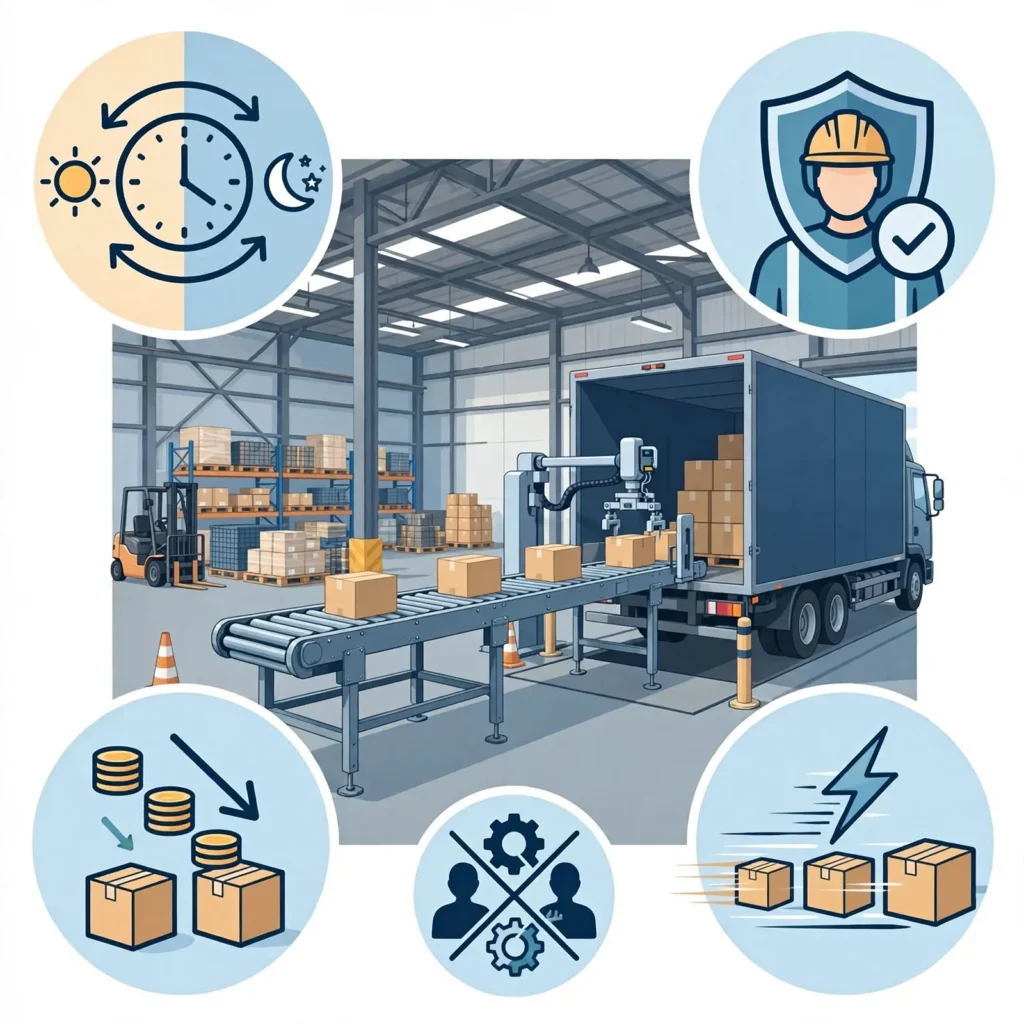
One of the major advantages of automation is the ability to streamline repetitive loading activities. By reducing unnecessary movement and coordinating material flow, an Automatic Truck Loading System can help shorten loading cycles and improve truck turnaround.
02

Reduced Manual Handling

Manual handling can involve repeated lifting, pushing, carrying, and movement of products. Automating these repetitive activities can reduce the amount of physical handling required from workers and allow employees to focus on other operational responsibilities.
03

Improved Productivity

Automated systems can support consistent material movement throughout the loading process. When loading becomes more organised, warehouse teams can potentially handle higher volumes without increasing manual activity at the same rate.
04

Better Workplace Safety

Truck loading areas can involve workers, forklifts, vehicles, pallets, and moving products. An automated system can reduce certain types of unnecessary interaction and can incorporate safety features designed around the specific operation.
05

Consistent Loading Performance

Manual loading performance may vary depending on staffing, workload, product type, and operating conditions. Automation provides a controlled sequence that can make loading operations more consistent.
06

Improved Truck Turnaround Time

Faster loading can help reduce the amount of time a truck spends at the loading dock. Better truck turnaround can be particularly valuable for companies managing frequent vehicle movements throughout the day.
07

Better Material Flow

An automated loading system can connect warehouse storage, production, conveyors, and dispatch operations into a more organised material flow. This can help reduce unnecessary product movement within the facility.
automatic truck loading
Industries

Applications of Automatic Truck Loading Systems

An Automatic Truck Loading System can be used across different industries where products need to be transferred efficiently into outbound vehicles.

Manufacturing

Manufacturing facilities can use automated loading systems to move finished products from production or storage areas into trucks. This can be particularly useful where dispatch volumes are high and products need to be moved continuously.

FMCG

The fast-moving consumer goods industry handles large quantities of packaged products and frequent dispatch operations. Automation can help improve the speed and organisation of outbound material movement.

Logistics and Distribution

Distribution centres need efficient loading processes because trucks may arrive and depart throughout the day. Automated loading can help create a more structured connection between warehouse operations and transportation.

Warehousing

Large warehouses can integrate automatic truck loading with existing conveyor networks, pallet handling equipment, sorting systems, and other warehouse automation technologies.

Food and Beverage

Food and beverage businesses often handle large volumes of packaged products. Automated material handling can help streamline product movement between storage and transportation.

Packaging Industry

Packaging companies can use automated loading systems for the movement of cartons, boxes, bags, and other packaged products.
Integration

Automatic Truck Loading for Warehouse Automation

Warehouse automation is becoming increasingly important as businesses look for ways to improve productivity and manage growing product volumes.
An Automatic Truck Loading System can become part of a larger automated material handling environment. Connecting these processes can help create a continuous flow from production or storage through to vehicle loading.
Depending on the facility, it can be connected with:
  • Conveyor systems
  • Pallet handling systems
  • Sortation equipment
  • Warehouse Management Systems
  • Automated Storage and Retrieval Systems
  • Barcode scanning
  • RFID technology
  • Robotic handling systems
  • Production lines
  • Dispatch management systems
Comparison

Automatic Truck Loading vs Manual Truck Loading

Manual truck loading relies heavily on workers and conventional material handling equipment. Automated truck loading focuses on using machinery and control systems to reduce repetitive manual processes.
ParameterManual LoadingAutomatic Loading
Labour dependencyHigherReduced
Process consistencyCan varyMore controlled
Repetitive handlingHigherLower
Automation levelLimitedHigh
Loading processLabour-drivenSystem-driven
ScalabilityDependent on manpowerAutomation-based
Material flowMore manualMore structured
However, automation should not be selected simply because it is technologically advanced. Businesses should evaluate their actual loading volumes, products, facility layout, and return on investment before selecting a solution.
Buyer's Guide

How to Select the Right Automatic Truck Loading System

Choosing the right automated loading system requires an understanding of the complete loading operation.
01

Product Type

The dimensions, weight, shape, packaging, and stability of the product are important considerations. A system suitable for cartons may not necessarily be suitable for heavy pallets or irregularly shaped products.
02

Truck Configuration

Different truck sizes and body configurations may require different loading arrangements. The loading system should be designed around the vehicle fleet being used.
03

Loading Volume

The number of products and trucks handled per hour or shift can help determine the required system capacity.
04

Loading Pattern

Businesses should determine how products need to be positioned inside the vehicle. The desired loading arrangement can influence conveyor configuration and automation requirements.
05

Available Space

Warehouse layout and loading dock dimensions are critical when planning an automated solution. Equipment should be positioned without unnecessarily affecting existing warehouse movement or emergency access.
06

Integration

If the facility already uses conveyors, warehouse software, production automation, or other material handling systems, the new loading system may need to integrate with those technologies.
07

Safety

Safety should be considered from the initial design stage. Appropriate sensors, guarding, emergency stops, access controls, and operating procedures can be incorporated according to the application.
automated truck loading equipment
About Think Blue

Think Blue – Automation for Modern Material Handling

Think Blue focuses on automation and material handling solutions that can be developed around specific industrial requirements.
Every warehouse and manufacturing facility has different challenges. Product dimensions, loading volumes, vehicle types, floor space, dispatch schedules, and existing equipment can all affect the ideal solution.
For this reason, an Automatic Truck Loading System should be planned according to the actual requirements of the facility rather than using a one-size-fits-all approach.
Think Blue can support businesses looking to improve areas such as:
Logistics

Role of Automation in Modern Logistics

The logistics industry is moving towards faster and more technology-driven operations. Customers expect shorter delivery timelines, while businesses need to manage costs and improve productivity.
Truck loading is an important part of this process.
Even when a warehouse has efficient storage and picking systems, delays at the loading dock can create bottlenecks. Automating the loading stage can help connect warehouse activities with outbound transportation more effectively.
This makes an Automatic Truck Loading System an important consideration for businesses planning long-term warehouse automation.
What's Next

Future of Automatic Truck Loading Systems

The future of automated truck loading is closely connected with developments in robotics, artificial intelligence, sensors, machine vision, and industrial control systems. As warehouse automation becomes more sophisticated, loading systems can increasingly become part of connected digital operations.
Businesses may be able to monitor information such as:
The growing use of automation can help businesses move towards more predictable, scalable, and data-driven logistics operations.
Investment

Why Invest in an Automatic Truck Loading System?

The decision to invest in automation should be based on operational requirements and long-term business objectives.
For facilities handling high volumes of products, repetitive truck loading, frequent vehicle movements, or labour-intensive loading processes, automation can provide an opportunity to improve efficiency.
An Automatic Truck Loading System can help businesses focus on:
The benefits will vary according to system design, application, operating conditions, and facility requirements.
An Automatic Truck Loading System can transform the way products move from warehouses and production facilities into outbound vehicles. By combining conveyors, sensors, control systems, and automated material handling technologies, businesses can create a more streamlined and controlled truck loading process.

From manufacturing plants and FMCG facilities to warehouses, distribution centres, and logistics operations, automated loading can be adapted to a wide range of applications.

The right solution depends on several factors, including product characteristics, truck configuration, loading volume, required throughput, facility layout, safety requirements, and existing automation infrastructure.
Think Blue provides automation and material handling solutions focused on modern industrial requirements. With a properly planned Automatic Truck Loading System, businesses can work towards faster loading, improved material flow, reduced repetitive handling, and a more efficient logistics operation.
As industries continue adopting warehouse automation, automated truck loading is becoming an increasingly valuable part of modern material handling and dispatch systems.

Frequently Asked Questions

An Automatic Truck Loading System is an automated material handling solution used to transfer products from a warehouse, production line, or storage area into trucks with reduced manual intervention.

The main benefits can include faster loading, reduced repetitive manual handling, improved process consistency, better material flow, increased productivity, and potentially shorter truck turnaround times.

They can be used in manufacturing plants, warehouses, distribution centres, logistics facilities, FMCG operations, packaging industries, and other high-volume material handling environments.

Yes. Automated truck loading solutions can be designed for palletised products using suitable pallet conveyors, transfer systems, lifts, and other material handling equipment.

Yes. The system can be designed according to factors such as product type, product dimensions, weight, truck configuration, loading volume, facility layout, and required throughput.

It depends on the business’s loading volume, labour requirements, operating costs, growth plans, and expected return on investment. A detailed application assessment can help determine whether automation is suitable.

Automation can reduce the need for repetitive manual material movement. However, trained personnel may still be required for system operation, supervision, maintenance, quality checks, and other warehouse activities.

Truck loading is an important part of the outbound logistics process. Automating it can help connect warehouse material flow with transportation and reduce potential bottlenecks at the loading dock.

Businesses should evaluate product characteristics, truck types, loading volumes, throughput requirements, available space, existing equipment, integration requirements, safety considerations, and investment expectations before selecting a system.